🌙 Sleep Calculator

Find your ideal sleep window and get AI-backed tips for better rest.

Select your age range
Recommended sleep:
Pick an age group to see your recommended hours.
Sleep Schedule

Sleep Calculator – Discover Your Perfect Bedtime and Wake Time

Struggling to get out of bed even after sleeping for hours? The problem might not be how long you’re sleeping, but when you’re waking up. Our intelligent sleep calculator takes the guesswork out of planning your sleep schedule by aligning your wake time with your body’s natural rhythms, helping you rise feeling energized instead of exhausted.

Understanding Your Sleep Calculator

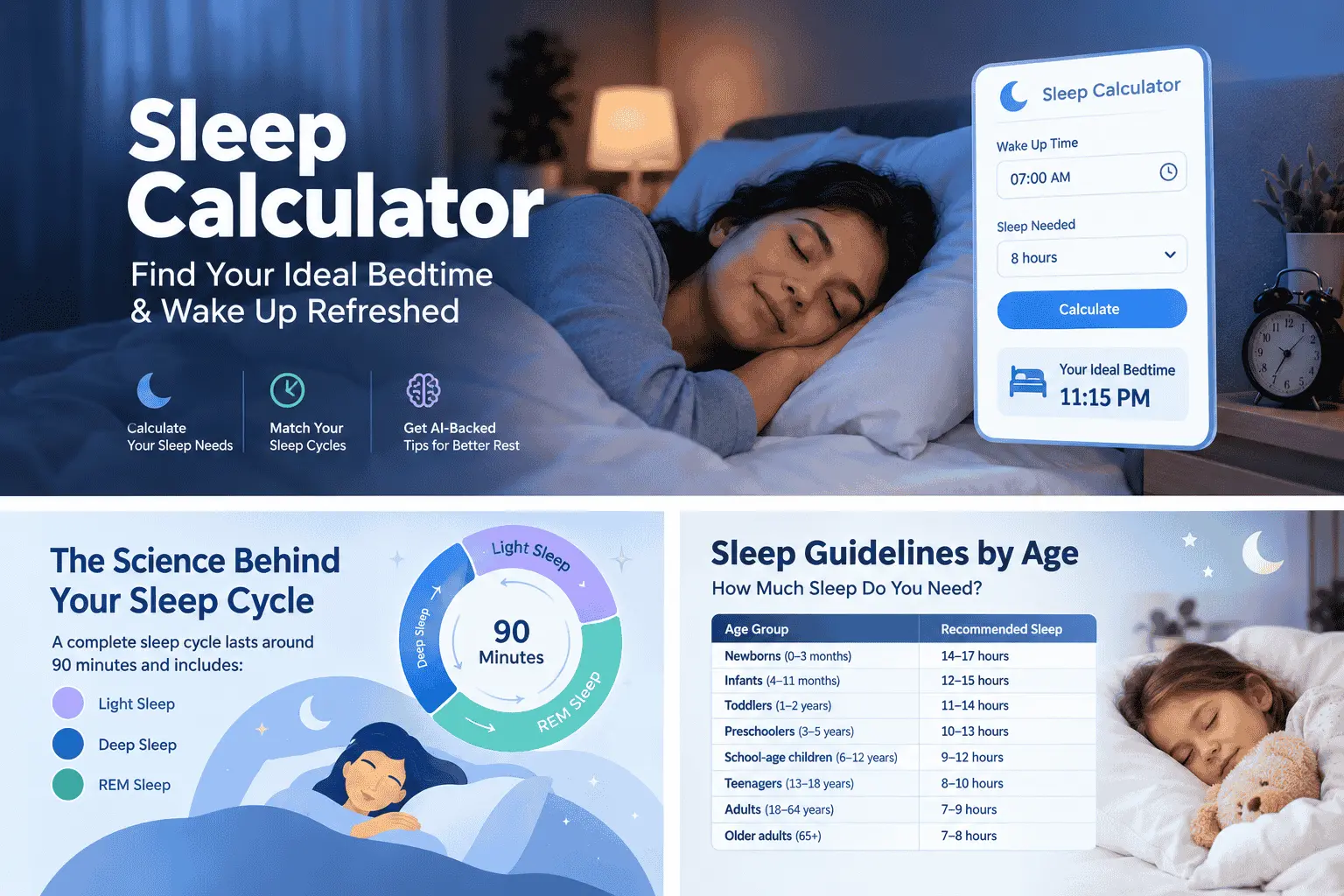
Think of this tool as your personal sleep strategist. It analyzes your preferred wake-up or bedtime and calculates the ideal corresponding time based on how your brain naturally cycles through different sleep phases. Rather than interrupting your deep slumber, the calculator ensures your alarm goes off when you’re already in lighter sleep, making mornings dramatically easier.why-good-sleep-is-essentialThe concept is straightforward: your brain doesn’t sleep uniformly throughout the night. Instead, it moves through distinct phases in roughly 90-minute patterns. By planning your sleep around these complete patterns, you avoid the zombie-like grogginess that comes from waking mid-cycle.

The Mechanics Behind Sleep Cycle Timing

Every night, your brain embarks on a fascinating journey through multiple sleep phases. Here’s what makes timing so crucial:Each complete cycle takes about 90 to 110 minutes from start to finish. During a typical night, you’ll complete anywhere from four to six of these cycles. The calculator factors in several key elements: the average duration of each cycle, the typical 10 to 20 minutes most people need to actually fall asleep, your age group, and recommended sleep totals for optimal health.When you input your target wake time, the tool works backward, adding that falling-asleep buffer and then counting back in complete cycles. This gives you multiple bedtime options. Similarly, if you enter when you plan to hit the pillow, it calculates forward to show you the optimal alarm times.

Breaking Down Your Nightly Sleep Journey

Your sleep isn’t just “on” or “off”—it’s a sophisticated process with four distinct phases that repeat throughout the night:

Initial Light Sleep Phase

This opening act lasts just five to ten minutes as you transition from full awareness to actual sleep. Your eyes move slowly, muscles begin relaxing, and you might experience those strange jerking sensations as your body settles in. You’re easily awakened during this phase.

Deeper Light Sleep Phase

Taking up roughly half your total sleep duration, this phase involves your heart rate steadily decreasing and your body temperature dropping. Your brain produces specific wave patterns called sleep spindles that help block out external disturbances. This phase prepares your body for the truly restorative sleep ahead.

Slow-Wave Deep Sleep

This is the goldmine of rest, comprising about a quarter of your night. Your body focuses on physical restoration—repairing damaged tissues, strengthening your immune defenses, and building muscle and bone. If someone wakes you during this phase, you’ll feel confused and disoriented, taking up to half an hour to fully function. This is the sleep inertia you want to avoid.

Dream Stage REM Sleep

Named for the rapid eye movements that occur, this phase activates your brain almost as much as when you’re awake, yet your muscles are temporarily paralyzed. This is prime dreaming territory and essential for memory formation, emotional processing, and learning. REM periods start about 90 minutes into sleep and make up roughly 20 to 25 percent of your total rest time.

Age-Based Sleep Requirements

Your body’s sleep needs evolve throughout your life. Here’s what different age groups should target:Newborns under three months require 14 to 17 hours daily. Infants from four to eleven months need 12 to 15 hours. Toddlers aged one to two years function best with 11 to 14 hours. Preschool children between three and five should get 10 to 13 hours. School-age kids from six to thirteen need 9 to 11 hours. Teenagers between 14 and 17 require 8 to 10 hours. Adults from 18 to 64 should aim for 7 to 9 hours. Older adults over 65 typically need 7 to 8 hours.For most working adults, this translates to completing five or six full sleep cycles each night to feel properly rested.

Why Strategic Sleep Timing Changes Everything

Morning Energy Transformation

When your alarm matches your natural sleep rhythm, you’ll open your eyes feeling ready to move rather than needing to drag yourself out of bed. The difference is remarkable and immediate.

Enhanced Sleep Efficiency

Establishing a predictable pattern based on your cycles helps regulate your internal body clock, making it easier to fall asleep and stay asleep naturally without sleep aids.

Sharper Mental Function

Properly timed rest dramatically improves your ability to focus, remember information, solve problems, and make sound decisions throughout your day.

Physical Health Protection

Quality, well-timed sleep strengthens disease resistance, accelerates healing, balances hormone production, and reduces risks of serious health conditions including heart disease and diabetes.

Emotional Stability

Adequate sleep on the right schedule helps you manage stress more effectively, stabilizes your mood, and significantly lowers anxiety and depression risks.

Simple Steps to Calculate Your Ideal Sleep Times

Planning your morning wake time: Enter the time your alarm needs to ring. The calculator adds the typical falling-asleep period of 10 to 20 minutes, then works backward through complete 90-minute cycles. You’ll receive several bedtime suggestions representing four, five, or six complete cycles. Pick whichever bedtime fits your evening schedule.Planning from your bedtime: Input when you realistically plan to turn off the lights. The tool accounts for falling asleep time, then projects forward through complete cycles. You’ll see multiple wake-up options. Choose one and set your alarm accordingly for a much gentler morning.

Proven Strategies for Superior Sleep

Lock in Consistent Timing

Your body thrives on predictability. Commit to the same bedtime and wake time seven days a week—yes, including weekends. This consistency strengthens your circadian rhythm and makes quality sleep nearly automatic.

Design a Wind-Down Ritual

Dedicate the final 30 to 60 minutes before bed to relaxing activities that signal sleep time:
  • Dim the lights and read something enjoyable but not too stimulating
  • Soak in a warm bath to relax muscles and lower body temperature
  • Practice breathing exercises or meditation to calm your mind
  • Do gentle stretches to release physical tension
  • Listen to soft instrumental music or nature sounds

Engineer Your Sleep Space

Transform your bedroom into a sleep sanctuary. Keep the temperature between 60 and 67 degrees Fahrenheit. Eliminate all light sources with blackout curtains or a comfortable sleep mask. Block disruptive sounds using earplugs or a white noise machine. Invest in a supportive mattress and pillows that suit your sleeping position. Remove televisions, computers, and phones that emit sleep-disrupting blue light.

Time Your Consumption Wisely

Stop consuming caffeine at least six hours before bedtime—it stays in your system longer than most people realize. While alcohol might make you drowsy initially, it severely disrupts REM sleep and causes fragmented rest. Finish your last substantial meal at least two to three hours before bed to avoid digestive discomfort. Stay hydrated throughout the day but taper off liquids in the evening to minimize nighttime bathroom trips.

Move Your Body Regularly

Daily physical activity promotes deeper, more restorative sleep. However, timing matters—intense exercise too close to bedtime can leave you too energized to sleep. Finish vigorous workouts at least two to three hours before your planned bedtime.

Address Mental Stress

Racing thoughts and worry are sleep’s biggest enemies. Build stress management into your daily routine through mindfulness practices, keeping a worry journal to externalize concerns, or talking through anxieties with trusted friends or a counselor.

Recognizing Sleep Disorder Warning Signs

Sometimes poor sleep isn’t about timing or habits—it’s a medical issue requiring professional attention:
  • Chronic insomnia means regularly struggling to fall asleep or stay asleep despite adequate opportunity and causing daytime impairment.
  • Sleep apnea involves repeated breathing pauses during sleep that fragment rest and prevent reaching deeper, restorative stages.
  • Restless legs syndrome creates uncomfortable sensations and irresistible urges to move your legs, particularly when trying to relax at night.
  • Narcolepsy causes overwhelming daytime sleepiness and sudden, uncontrollable sleep episodes regardless of how much you slept previously.
  • Circadian rhythm disorders occur when your internal clock is significantly misaligned with your required schedule, common in shift workers.
If you’ve implemented good sleep practices without improvement, consult a healthcare provider who specializes in sleep medicine.

The Biology of Sleep Timing

Your Internal Clock

Everyone has a built-in 24-hour cycle called the circadian rhythm that governs sleep-wake patterns. Light exposure, particularly sunlight, is the primary signal that keeps this clock synchronized with the external world. Your brain produces melatonin as darkness falls, creating sleepiness, and suppresses it when exposed to bright light.

Building Sleep Drive

Sleep pressure accumulates the longer you stay awake. Think of it like hunger—the more time passes, the stronger the drive becomes. Quality sleep “pays off” this accumulated pressure, resetting you for the next day.

Your Nightly Pattern

Sleep architecture describes how you cycle through different sleep stages multiple times per night in a predictable pattern. The first half of the night typically contains more deep sleep, while the second half features longer REM periods. Understanding this pattern explains why eight hours of fragmented sleep feels nothing like eight hours of continuous rest.

The High Cost of Poor Timing

Waking up mid-cycle, particularly during deep or REM sleep, triggers sleep inertia—a state of impaired function that can seriously affect your morning. You might experience:
  • Mental fog and confusion that makes simple tasks difficult
  • Slowed reaction times that can be dangerous when driving
  • Poor judgment and decision-making abilities
  • Irritability and mood swings
  • Physical heaviness and coordination issues
This grogginess can persist anywhere from 15 minutes to over an hour, stealing your morning productivity. Using a sleep calculator sidesteps this entirely by timing your wake-up for lighter sleep stages when your brain is naturally closer to consciousness.

Variables That Influence Your Sleep

Life Stage

Sleep patterns shift dramatically across your lifespan. Infants spend much more time in REM sleep for brain development, while older adults typically experience less deep sleep and wake more frequently.

Daily Schedule

Work obligations, family responsibilities, and social activities all constrain when you can realistically sleep. People working nights or rotating shifts face particular challenges maintaining healthy sleep patterns.

Medical Conditions

Ongoing pain, breathing difficulties, hormonal fluctuations, and psychiatric conditions can all significantly disrupt normal sleep architecture.

Medication Effects

Various medications can interfere with sleep cycles, either promoting certain stages, suppressing others, or affecting your ability to fall or stay asleep.

Psychological Factors

Stress, anxiety, and depression rank among the most common causes of sleep problems, impacting both sleep onset and maintenance throughout the night.

Common Questions About Sleep Calculation

  • How reliable are these calculations? The calculator uses scientifically-based average cycle lengths, but individual cycles can range from 80 to 120 minutes. Pay attention to how you feel and adjust if needed.
  • Does this work for short naps? Absolutely. For a quick energy boost, stick to 20 to 30 minutes to avoid entering deep sleep. For more substantial rest, complete one full 90-minute cycle.
  • What if falling asleep takes me much longer? If you consistently need more than 30 minutes to fall asleep, adjust the calculator’s timing or address underlying sleep-onset issues that might indicate insomnia.
  • Should I sacrifice sleep hours to wake at the right time? Never. While cycle timing improves how you feel, total sleep duration remains critical for health. Always prioritize getting sufficient hours—7 to 9 for most adults.
  • Can people with sleep disorders use this? The calculator offers general guidance but may not apply to diagnosed sleep disorders where normal sleep architecture is disrupted. Work with your healthcare provider for personalized recommendations.

Begin Your Sleep Transformation Right Now

Few things impact your life as profoundly as sleep quality. By using this calculator to align your schedule with your natural sleep cycles, you’re making a powerful investment in your physical health, mental sharpness, and emotional wellbeing.The key to success is consistency. Give your body at least two to three weeks following your calculated schedule to adapt and establish new rhythms. Track how you feel each morning—most people notice significant improvements within the first week.Don’t settle for waking up tired and struggling through your mornings. Take control of your sleep timing today and discover how much better you can feel when you work with your body’s natural rhythms instead of against them.Calculate your personalized sleep schedule now and start experiencing what it feels like to wake up truly refreshed!Note: This sleep calculator offers general recommendations based on typical sleep patterns. Individual requirements vary. For persistent sleep difficulties or suspected sleep disorders, please seek guidance from a qualified healthcare professional.

Learn More:

Advanced Age Calculator vs Age Calculator – What’s the Difference?

In this page, you learn the key differences between an advanced age calculator and a basic age calculator. It explains how advanced calculators provide more accurate and detailed age results, support medical and professional needs, and help users make better decisions compared to simple age calculation tools.

Advance Age Calculator for Medical Purposes

Medical age calculators help doctors and patients know the exact age of a person. They are used for giving correct medicine doses, tracking child growth, planning vaccinations, and managing pregnancy. Different types include chronological, biological, gestational, and pediatric dosing calculators. These tools save time, reduce mistakes, and make healthcare safer and more accurate.

Why Age Is So Important in Human Mating

Age plays a powerful role in human attraction, dating patterns, and long-term relationship choices. Research across cultures shows clear differences in how men and women view age in partners—men often prefer younger partners, while women tend to prefer same-age or slightly older partners for stability and maturity. Age gap relationships can be deeply fulfilling but may face social pressure. Understanding how age influences preferences, compatibility, and relationship success can help you make smarter, more confident decisions in your dating life.